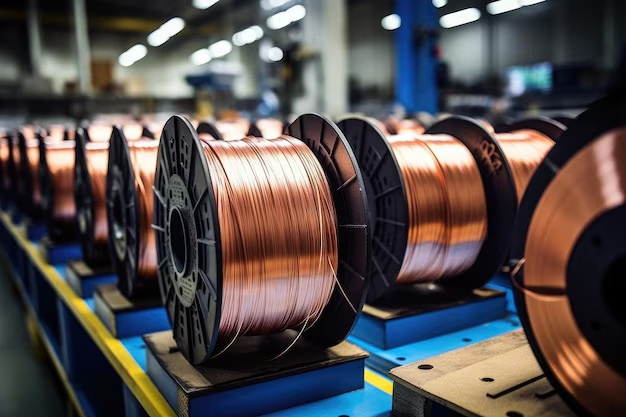


In recent years, the electrical industry has seen a strong shift toward high-performance and future-ready materials, and silver conductors have emerged as a trending topic among engineers, manufacturers, and safety-focused consumers. From smart homes to industrial automation, the demand for efficient and reliable electrical cables is increasing, and silver is often discussed as the benchmark for conductivity and durability. Brands like KE Kable, which focus on safety, innovation, and performance, closely study such material trends to understand how they influence modern wiring solutions.
Silver has always held a special place in electrical engineering because it offers the highest electrical conductivity of all metals. As energy efficiency, heat management, and long-term safety become critical concerns, silver-based conductors are gaining attention in premium applications, research environments, and advanced power systems.
Understanding Electrical Conductivity and the Role of Silver
Electrical conductivity refers to how easily electric current flows through a material. The lower the resistance, the less energy is lost in the form of heat. This is where silver clearly stands apart. Compared to copper and aluminium, silver allows current to flow more freely, which results in reduced power loss and better thermal stability.
In high-load or sensitive electrical systems, even a small improvement in conductivity can significantly improve performance and safety. This is why silver is often used in critical contact points, high-end connectors, and advanced electrical components, while companies like KE Kable continue to innovate using high-grade copper conductors that balance performance and affordability for everyday wiring needs.
Why Silver Is Trending in the Electrical Cable Industry
The growing popularity of silver in electrical discussions is not random. Several global trends are driving this interest, including renewable energy systems, electric vehicles, data centers, and smart infrastructure. These systems require materials that can handle high current density, minimal signal loss, and long operational life.
Silver is also trending because modern manufacturing technologies now allow silver-plated conductors, where a thin layer of silver is applied over copper. This combines copper’s strength with silver’s superior conductivity, offering a performance upgrade without the extreme cost of pure silver cables. Such hybrid approaches are frequently discussed in industry research and are influencing how premium cable solutions are designed.
Table 1: Comparison of Electrical Conductive Materials
| Property | Silver | Copper | Aluminium |
|---|---|---|---|
| Electrical Conductivity | Highest (≈106%) | Very High (≈100%) | Moderate (≈61%) |
| Heat Resistance | Excellent | Very Good | Average |
| Oxidation Resistance | Very High | Medium | Low |
| Cost | Very High | Medium | Low |
| Typical Usage | Premium, research, contacts | Home & industrial wiring | Power transmission |
This comparison clearly shows why silver is often considered the gold standard for electrical conductivity, even though copper remains the most practical choice for residential and commercial wiring, as seen in products offered on sites like kekable.com where safety-certified copper cables are designed for Indian conditions.
Silver vs Copper: Performance vs Practicality
While silver outperforms copper in conductivity, the real-world decision is always about balance. Copper offers excellent conductivity, high tensile strength, and affordability, making it ideal for homes, offices, and industrial installations. This is why KE Kable focuses on high-purity copper conductors, ensuring optimal current flow, lower heating, and long service life.
Silver, on the other hand, is typically reserved for specialized environments, such as aerospace, medical equipment, advanced electronics, and high-frequency applications. In these areas, performance is more important than cost, and silver’s superior properties justify its use.
Heat Management and Safety Benefits of Silver Conductors
One of the biggest risks in electrical wiring is overheating, which can lead to insulation damage and fire hazards. Silver’s low resistance means it generates less heat under load, improving overall system safety. This is a key reason silver is frequently mentioned in discussions around next-generation electrical systems.
However, for standard residential wiring, safety is achieved not just through conductor material but also through proper insulation, manufacturing standards, and testing, which is why choosing a trusted brand like KE Kable matters more than simply choosing a rare metal.
Table 2: Applications Where Silver Conductors Are Commonly Used
| Application Area | Reason for Using Silver |
|---|---|
| High-frequency electronics | Minimal signal loss |
| Aerospace & defense | Extreme reliability |
| Medical equipment | Precision and safety |
| Premium connectors | Low contact resistance |
| Research laboratories | Accurate power delivery |
This table highlights that silver is mainly used where precision and performance are non-negotiable, rather than in everyday household wiring.
Silver-Plated Conductors: A Practical Compromise
To bridge the gap between performance and cost, many manufacturers explore silver-plated copper conductors. These conductors improve surface conductivity and corrosion resistance while retaining copper’s mechanical strength. This approach is often discussed in global electrical engineering publications and aligns with the industry’s push toward smarter and more efficient power solutions.
Even though silver-plated conductors are trending, most electrical safety experts still recommend high-quality copper cables from certified manufacturers for residential and commercial use, especially in regions with voltage fluctuations and high ambient temperatures.
Environmental and Economic Considerations
Silver is a precious metal, and its mining and processing have environmental and economic implications. Large-scale use of silver in electrical cables is not sustainable or cost-effective for mass housing projects. Copper, being more abundant and recyclable, remains the backbone of the electrical cable industry.
This is why brands like KE Kable invest heavily in quality control, material purity, and insulation technology rather than chasing trends that are not practical for real-world users.
Future Outlook: Will Silver Replace Copper?
Despite its superior properties, silver is unlikely to replace copper in mainstream electrical wiring. Instead, silver will continue to influence innovation, research, and premium applications, while copper remains the most trusted material for everyday electrical needs.
The real future lies in better cable design, advanced insulation, and strict safety standards, areas where reliable manufacturers play a crucial role. As awareness grows, consumers are learning that choosing the right cable brand is more important than choosing exotic materials.
Conclusion
Silver conductors are trending because they represent the highest level of electrical performance, efficiency, and reliability. Their use in advanced applications highlights where the electrical industry is heading, but practicality, affordability, and safety still make copper the preferred choice for homes and businesses.
For users looking to balance innovation with reliability, trusted brands like KE Kable offer high-quality copper cables engineered for safety, durability, and long-term performance, proving that smart material choices matter more than trends alone.