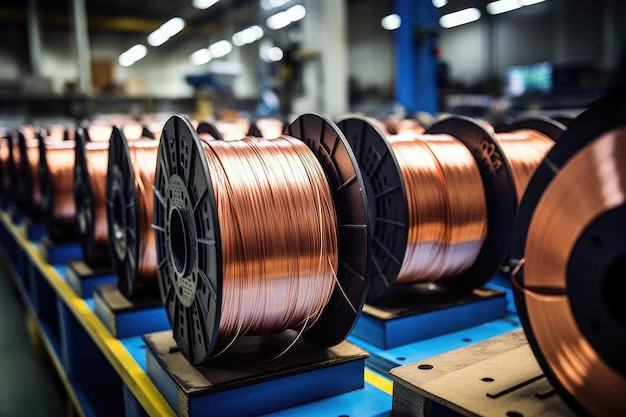


India Electronics Manufacturing Hub is gaining global attention in 2026 as multinational companies shift production to India. With strong government incentives, skilled workforce availability, supply-chain diversification, and rising domestic demand, India Electronics Manufacturing Hub is becoming one of the fastest-growing industrial ecosystems in the world.
India is rapidly emerging as one of the world’s most important electronics manufacturing destinations. From smartphones and consumer electronics to power cables, connectors, and industrial components, the country is now a preferred choice for global manufacturing investments.
For companies operating in cable, wire, and power connectivity sectors such as KE Kable, this transformation opens massive opportunities in both domestic and export markets.
1. Government Policies Driving Electronics Manufacturing Growth
One of the biggest reasons behind India’s manufacturing boom is strong policy support. The Government of India launched multiple schemes to encourage domestic production and attract global investors.
Key Policy Initiatives
| Scheme | Objective | Impact |
|---|---|---|
| PLI (Production Linked Incentive) Scheme | Incentives for electronics manufacturing | Attracted global smartphone and component makers |
| Make in India Initiative | Boost domestic manufacturing | Increased local production capacity |
| Electronics Manufacturing Clusters (EMC) | Infrastructure for electronics factories | Reduced operational cost for manufacturers |
| Export Promotion Policies | Support exports of electronics goods | Strengthened global competitiveness |
These policies have significantly reduced import dependency and encouraged companies to manufacture locally.
2. China+1 Strategy: A Major Global Shift
Many global electronics brands are adopting the China+1 supply chain strategy, meaning they are expanding production beyond China to reduce risk. India has emerged as one of the strongest alternatives due to:
- Political stability
- Growing infrastructure
- Large domestic market
- Competitive labor costs
- Government manufacturing incentives
As a result, several multinational companies are building new manufacturing plants in India in 2025–2026, accelerating the country’s transformation into a global electronics hub.
3. Growing Domestic Demand for Electronics
India is one of the fastest-growing electronics consumption markets in the world. Rising middle-class income, rapid urbanization, and digital transformation are driving demand for:
- Smartphones and accessories
- Consumer electronics
- Industrial automation equipment
- Electric vehicle components
- Power cables and connectivity solutions
- Renewable energy electrical systems
This growing internal demand encourages companies to manufacture locally rather than depend on imports.
Electronics Market Growth (Estimated)
| Year | Market Size (USD Billion) |
|---|---|
| 2022 | 155 |
| 2024 | 200 |
| 2026 | 300+ |
| 2030 (Projected) | 500+ |
The rapid market expansion makes India both a manufacturing base and a high-consumption market, which is highly attractive for investors.
4. Skilled Workforce and Engineering Talent
India produces millions of engineers and technical graduates every year, creating a strong talent pool for electronics manufacturing industries.
Key workforce advantages:
- Skilled electrical and electronics engineers
- Cost-competitive labor compared to developed markets
- Increasing automation and technical training programs
- Expanding industrial training institutes
For industries like power cable manufacturing, connectors, wiring harness, and electrical infrastructure, this workforce advantage ensures high production efficiency.
5. Rapid Infrastructure Development Supporting Manufacturing
India is investing heavily in logistics and industrial infrastructure to support manufacturing growth.
Infrastructure Improvements
| Infrastructure Area | Development Impact |
|---|---|
| Industrial corridors | Faster manufacturing setup |
| Dedicated freight corridors | Reduced logistics cost |
| New ports and airports | Faster export operations |
| Smart manufacturing zones | Advanced production ecosystems |
Better infrastructure significantly lowers operational cost for electronics manufacturers and improves export competitiveness. These developments are further strengthening the India Electronics Manufacturing Hub and attracting global manufacturers to set up production facilities in the country.
6. Rise of Component Manufacturing Ecosystem
Earlier, India primarily assembled electronic products, but now the country is rapidly developing component-level manufacturing, including:
- Printed circuit boards (PCBs)
- Wiring harnesses
- Connectors and terminals
- Power cords and cable assemblies
- Battery components
- Semiconductor packaging (emerging sector)
This expanding ecosystem strengthens local supply chains and reduces import dependency, making India a more reliable manufacturing destination.
For cable and connectivity brands like KE Kable, this shift creates opportunities to become OEM suppliers for global electronics manufacturers operating in India.
7. Export Opportunities Expanding Rapidly
India’s electronics exports are growing at a record pace. Global demand for reliable and cost-effective electronics components is encouraging manufacturers to export from India. As exports continue to grow, the India Electronics Manufacturing Hub is expected to play a major role in global electronics supply chains.
Key Export Advantages
- Competitive production cost
- Government export incentives
- Strategic geographic location
- Trade agreements with multiple countries
- Improved manufacturing standards
India is increasingly becoming a major exporter of:
- Smartphones
- Electrical cables and connectors
- Consumer electronics
- Industrial electronics components
8. Growth of Renewable Energy and EV Sector Boosting Electronics Manufacturing
Another major factor accelerating electronics manufacturing in India is the rapid expansion of renewable energy and electric vehicle industries.
These sectors require:
- High-performance power cables
- Charging infrastructure components
- Battery management electronics
- Industrial connectors
- Control and automation systems
This demand is creating new business opportunities for electrical cable and connectivity manufacturers in India.
9. Strong Investment Flow into Electronics Manufacturing
Global investors are heavily investing in India’s electronics sector. Both domestic and international companies are setting up large manufacturing plants, increasing production capacity and creating supply-chain networks.
Major Investment Drivers
| Factor | Impact |
|---|---|
| FDI policy reforms | Easier entry for global companies |
| Government incentives | Lower setup cost |
| Rising domestic demand | Long-term market confidence |
| Export growth potential | Global expansion opportunities |
These investments are strengthening India’s position as a global electronics manufacturing hub.
10. Opportunities for Cable and Connectivity Manufacturers
The growth of electronics manufacturing directly increases demand for power cables, connectors, power cords, and electrical accessories.
Key opportunities include:
- OEM supply partnerships with electronics manufacturers
- Export expansion for cable assemblies
- Industrial automation wiring solutions
- Renewable energy cable systems
- EV charging cable manufacturing
- Smart infrastructure wiring solutions
Brands focusing on quality manufacturing, certifications, and export compliance can benefit significantly from this growth.
Conclusion
In 2026, India is rapidly transforming into a global electronics manufacturing hub due to strong government policies, global supply-chain diversification, infrastructure development, skilled workforce availability, and growing domestic demand. With rising investments, expanding component ecosystems, and increasing export opportunities, India is set to become one of the world’s most important electronics production centers in the coming decade.
For companies operating in electrical cables, power connectivity, and electronics components, this transformation presents a massive opportunity to expand manufacturing capacity, strengthen OEM partnerships, and capture global market share. The rapid expansion of the India Electronics Manufacturing Hub is creating long-term opportunities for cable, connector, and power solution manufacturers.