

⚡ Introduction: One Small Difference That Can Change Electrical Safety
Most people never think twice before plugging an appliance into a socket. A cable is just a cable — right?
Not really.
The difference between a 2 pin vs 3 pin power cord directly affects:
- Electrical safety
- Shock protection
- Appliance lifespan
- Heat resistance
- Current handling capability
Today, millions of homes still use low-quality 2 pin cords for appliances that actually require proper earthing and higher load handling. This may seem harmless initially, but over time it increases the risk of:
- Overheating
- Current leakage
- Electric shock
- Appliance failure
- Short circuits
In this detailed guide, we’ll explain the real difference between 2 pin and 3 pin power cords using practical examples, electrical knowledge, and real-world appliance usage.
🔌 What Is a 2 Pin Power Cord?
A 2 pin power cord contains only:
- Live wire
- Neutral wire
It does NOT contain:
- Earth wire
This means there is no dedicated safety path if electrical leakage happens inside the appliance.
🔹 Where 2 Pin Cords Are Commonly Used
2 pin cords are generally used in:
- Mobile chargers
- Table lamps
- Bluetooth speakers
- Phone adapters
- Small plastic appliances
These devices usually:
- Consume low power
- Have double insulation
- Carry lower shock risk
⚠️ Biggest Limitation of 2 Pin Power Cord
The main issue is simple:
👉 No earthing protection.
If internal leakage happens:
- Current may pass through the appliance body
- User may receive electric shock
This is why 2 pin cords are not ideal for:
- Heavy appliances
- Metal body products
- High current equipment
🔌 What Is a 3 Pin Power Cord?
A 3 pin power cord includes:
✔ Live wire
✔ Neutral wire
✔ Earth wire (extra safety layer)
The third pin is connected to earth/ground.
This acts as a protection mechanism during leakage or fault conditions.
⚡ Why Earthing Is So Important
The earth wire is designed to safely transfer leakage current into the ground.
Without earthing:
- Leakage current searches for alternate path
- Human body can become that path
This is exactly why:
- Mixer grinders
- Refrigerators
- Washing machines
- Microwaves
- Electric irons
should always use a 3 pin power cord.
⚖️ 2 Pin vs 3 Pin Power Cord – Complete Comparison
| Feature | 2 Pin Cord | 3 Pin Cord |
|---|---|---|
| Safety Level | Basic | High ✅ |
| Earthing | ❌ No | ✅ Yes |
| Shock Protection | Low | Excellent |
| Appliance Support | Light devices | Heavy appliances |
| Current Handling | Limited | Better |
| Heat Resistance | Lower | Higher |
| Recommended for Kitchen Appliances | ❌ No | ✅ Yes |
🔥 Real-Life Example: Mixer Grinder Safety
A mixer grinder typically operates between:
- 500W to 1000W
During startup:
- Current demand suddenly increases
If a low-quality 2 pin cord is used:
- Wire may heat up
- Plug may loosen
- Leakage risk increases
A proper 3 pin copper power cord handles:
- Peak load
- Heat generation
- Safety grounding
much more efficiently.
🧪 Why Cheap Local Cords Become Dangerous
Many low-cost cables available in the market compromise on:
- Copper quality
- Insulation thickness
- Pin quality
- Internal wiring
- Earthing connection
Some fake “3 pin” cords even contain:
- Dummy earth pins
- Thin aluminium conductors
which creates serious safety risks.
🔥 Copper vs Aluminium – Hidden Difference
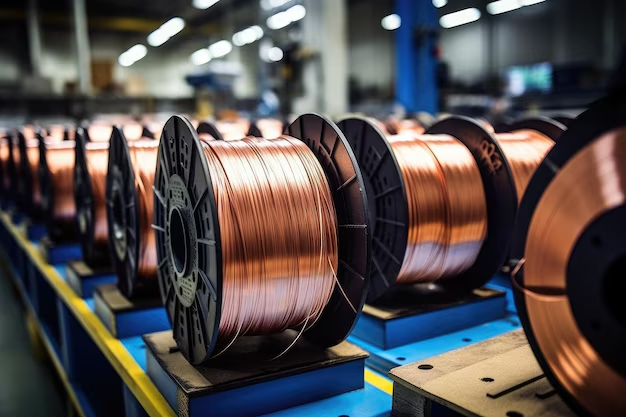
Most premium power cords use:
✅ Pure copper conductors
Cheap cables often use:
❌ Aluminium or mixed metal
⚡ Why Copper Is Better
Copper provides:
- Better conductivity
- Lower resistance
- Less heat generation
- Longer lifespan
This is why high-quality manufacturers focus heavily on conductor purity.
👉 Read more here:
https://kekable.com/copper-vs-aluminium-wire-which-is-better-for-home-safety/
📏 Correct Wire Size Matters Too
Even a 3 pin cord becomes unsafe if wire thickness is too low.
Recommended Wire Size
| Appliance Type | Recommended Size |
|---|---|
| Mobile Chargers | 0.5 sq mm |
| Mixer Grinder | 0.75–1 sq mm |
| Refrigerator | 1 sq mm |
| Iron | 1 sq mm |
Thin wires create:
- Resistance
- Voltage drop
- Excessive heat
🔥 Common Signs of Unsafe Power Cord
Watch for these warning signs:
⚠ Plug becomes hot
⚠ Burning smell
⚠ Loose connection
⚠ Sparks near socket
⚠ Cable hardening
⚠ Visible cracks
If any of these happen:
👉 Replace the cord immediately.
🏭 How High-Quality Power Cords Are Manufactured
Professional manufacturers follow multiple quality processes:
- Copper strand testing
- PVC insulation extrusion
- Crimping quality check
- Continuity testing
- Heat resistance testing
- Load testing
👉 Full manufacturing process explained here:
https://kekable.com/the-complete-guide-to-power-cord-manufacturing-ke-kables-expertise/
🛡️ BIS & ISI Certification Importance
In India, reliable power cords should comply with:
- BIS standards
- ISI certification
These certifications ensure:
✔ Proper insulation
✔ Load capacity
✔ Safety compliance
Official reference:
https://www.bis.gov.in
🚫 Biggest Mistake People Make
One of the most common mistakes is:
👉 Using cheap extension boards with heavy appliances.
Even a good 3 pin cord cannot perform safely if:
- Socket quality is poor
- Extension board is overloaded
💡 Which Appliances Should ALWAYS Use 3 Pin?
| Appliance | Recommended |
|---|---|
| Mixer Grinder | ✅ 3 Pin |
| Refrigerator | ✅ 3 Pin |
| Microwave | ✅ 3 Pin |
| Electric Iron | ✅ 3 Pin |
| Washing Machine | ✅ 3 Pin |
| Heater | ✅ 3 Pin |
🔍 Can You Use 2 Pin for Heavy Appliances?
Technically:
- Appliance may still work
But practically:
❌ It is unsafe.
Because:
- No earthing
- Higher current load
- Greater leakage risk
🚀 Why Premium Cable Brands Matter
Reliable brands focus on:
- Pure copper
- Flexible insulation
- Strong plug molding
- Consistent testing
This directly improves:
✔ Safety
✔ Durability
✔ Performance
Manufacturers like KE Kable focus on building cords suitable for real-world electrical conditions instead of only reducing production cost.
📈 Future of Electrical Safety in Indian Homes
As appliances become:
- More powerful
- More energy demanding
the importance of:
- Earthing
- Cable quality
- Load capacity
will continue increasing.
Modern homes now use:
- Air fryers
- Induction cooktops
- High-power kitchen equipment
which makes high-quality 3 pin power cords even more essential.
✅ Final Verdict: Which One Should You Choose?
If the appliance:
- Generates heat
- Uses motor load
- Has metal body
- Consumes medium/high power
👉 ALWAYS choose a 3 pin power cord.
The price difference is small.
The safety difference is huge.
A proper power cord doesn’t just power your appliance —
it protects your home.
Why Understanding 2 Pin vs 3 Pin Power Cord Matters in 2026
Many homeowners still ignore the difference between a 2 pin vs 3 pin power cord, even though it directly impacts appliance safety and electrical performance. Understanding the real difference between a 2 pin vs 3 pin power cord becomes extremely important when using modern kitchen appliances, heavy electrical devices, and high-load equipment.
A low-quality or incorrect 2 pin vs 3 pin power cord selection can lead to:
- Overheating
- Current leakage
- Electrical shock
- Appliance damage
Today, most professional electricians recommend choosing a 3 pin power cord instead of a 2 pin power cord for appliances like:
- Mixer grinders
- Refrigerators
- Electric irons
- Washing machines
The debate around 2 pin vs 3 pin power cord is not only about plugs — it is about safety, earthing, conductivity, and long-term durability.
When comparing 2 pin vs 3 pin power cord, the third pin becomes the biggest advantage because it provides earthing protection and reduces shock risk.
This is why premium manufacturers focus heavily on developing high-quality 2 pin vs 3 pin power cord solutions using:
- Pure copper conductors
- Strong insulation
- Heat-resistant materials
- BIS certified safety standards